Table of Content
For wood, the required moisture level of the feedstock is at or near 15 percent. Other types of biomass have other requirements--you may need to experiment a bit. Moisture can be removed from the feedstock by oven-drying or by blowing hot air over or through the particles. If the feedstock is too dry, moisture can be added by injecting steam or water into the feedstock. The amount of sawdust required to produce a ton of pellets depends on the moisture content of the sawdust.
The lignin, as well as resins in the material of biomass, melt at high temperatures, acting as a binder material between the biomass fibers. As the frictional forces grow as a result of the high pressure, resulting in a significant rise in temperature. If the biomass feedstock is very large, it is chipped before being ground.
What are Biomass Pellets Applications?
But when wood pellets are removed from that calculation, the EU’s zero-carbon renewables are closer to 9% of total energy. After pelletizing, biomass pellets need to be cooled for usage or storage. If you only need homemade pellet machine in small capacity, you do not need to buy pellet cooler; if you want to produce pellets in medium capacity, you probably need a pellet cooler. Two other important factors to consider when deciding whether to manufacture pellets are the availability of feedstock and the availability of a market. If you are producing pellets for your own personal use from biomass grown on your own farm, this is relatively easy to assess. However, if you are considering pellet making as a business, it is vitally important to identify and secure a steady supply of biomass for your needs.

A wide array of biomass materials can be used to manufacture pellets, most notably perennial grasses such as switchgrass or miscanthus. News of Australia’s decision quickly reached forest advocates and policymakers in Brussels, where EU officials are finalizing revisions to their Renewable Energy Directive . And large biomass subsidies continue being paid for wood pellet burning. Wood pellets are a type of fuel that is created from compressed sawdust or other types of wood waste. They can be used to generate electricity or heat homes as a sustainable, renewable energy source.
The role of biomass in securing reliable power generation
Fresh pellets from the mill are damp and hot, and need to rest and cool before transporting off site. They’re moved to large storage silos kept at low temperatures so the pellets can cool and harden, ready for shipping. Burn high-quality pellets to keep emissions and soot to a minimum while providing maximum efficiency. At last, you can enjoy the heat produced by your own homemade pellets or use the pellets for your cattle. Packaging the cooled pellets in moisture-proof bags or containers will also help to prevent them from absorbing water from their environment.
If somehow the pellet diameter is too big or too small, the efficiency of the pellet suffers, and energy usage rises as a result. Drying biomass improves its efficiency and creates nearly no smoke when burned. You can also employ high-temperature steam dryers, flashing dryers, spouted bed dryers, even belt dryers.
Manufacturing Fuel Pellets from Biomass
Pour the wood into the bowl, adding vegetable oil if you’re using it, and attach a curved arm for mixing the material. Inside the hammer mill there’s a spinning shaft mounted with a series of hammers. The wood chips are fed into the top of the drum and the spinning hammers chip and shred them down into a fine powdery substance that is used to create the pellets. At present, as EU negotiations conclude, it seems doubtful further limits on biomass usage and subsides will be added to RED, nor is the renewable energy designation likely to change. The EU spends more than $18 billion annually subsidizing bioenergy with most of that money going to woody biomass.
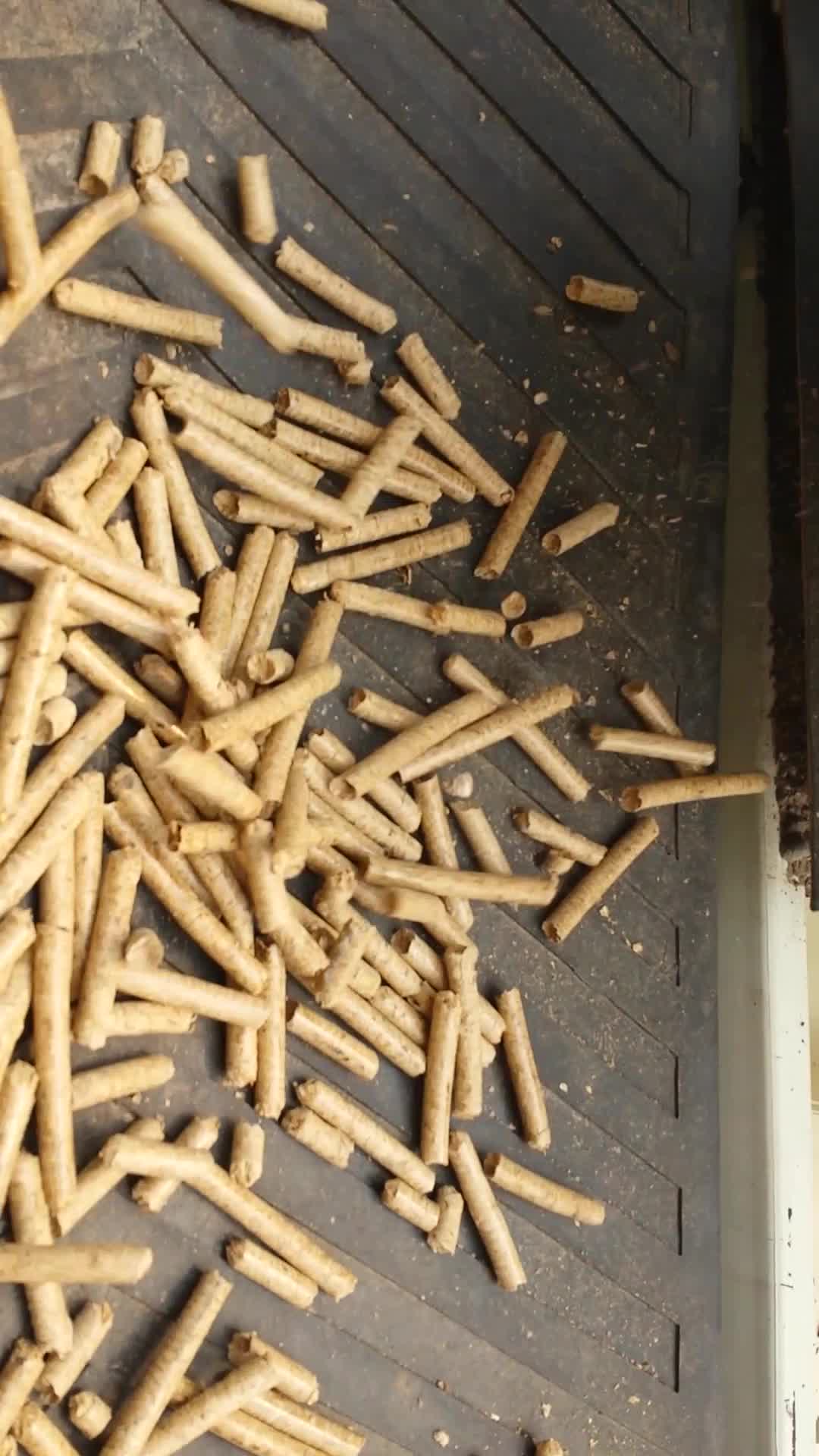
Heavily wooded Sweden and Finland are on record supporting biomass harvesting and burning. Pellets, as they leave the die, are quite hot (~150°C) and fairly soft. Therefore, they must be cooled and dried before they are ready for use. This is usually achieved by blowing air through the pellets as they sit in a metal bin.
Wood pellets are important commodity in the world for industrial or household use. To make pellets, the biomass must first be cleaned to remove contaminants. The clean biomass is then ground in a hammer mill or chipped to a uniform size, which must be less than the thickness of the pellet that will be produced. Grinding down biomass helps to reduce the horsepower the pellet mill must produce.

Rising energy costs have some homeowners looking for home heating alternatives. Becoming a viable heating solution in the mid-80s, pellet stoves’ efficiency, safety and versatility have only increased since those early days. Today, pellet stoves come in various styles and sizes that are adaptable to almost any home. We asked our resident expert about these surprisingly capable heating systems.
Wood pellets are typically made from hardwood trees such as oak or maple, but they can also be made from softwood trees like pine. The pellets are formed by compressing the wood waste under high pressure and then sealing it in a moisture-resistant wrapping. This process helps to preserve the energy content of the pellets and makes them easier to store and transport.

But that situation was poised to change, according to Virginia Young, a forest advocate with Wilderness Australia, an NGO. An upper hopper, as well as a conveyor belt, are used to put the pellets inside bags. The average amount of energy needed for pelletization is around 16 and 49 kW hour/turn. Pelletization would be the next but most crucial stage, which involves pressing biomass versus hot metal plate using a roller. Crushing with a hammer mill paired with a screen having a size of 3.2 to 6.4 mm is used to reduce the size.
The amount of moisture of biomass can be rather high, ranging between 50 and 60 percent, and must be lowered to 10 to 15 percent. A blending procedure is used to ensure consistency when there are multiple varieties of feedstock. Mainly they are used for producing heat or used as a source of igniting a fire at different places. Don’t add too much vegetable oil at first, since it’s easier to add more later if necessary.

The government decision is a small but significant blow to the wood pellet industry’s plans for nonstop global expansion. In 2011, industry advocates noted that although Australia’s biomass industry was “slow to develop,” it had potential. “Wood waste” was deemed one of the country’s “most underutilized resources” and would likely remain so without government subsidies — which never materialized. The cost of setting up a pellet plant is not cheap; as a rule of thumb, expect to pay $70,000 to $250,000 per ton-per-hour capacity. The wide variation in costs is a function of the size, quality, and availability of the equipment. Larger capacity equipment is often more expensive on a per-ton basis because of the greater durability of the equipment and higher quality of the resulting pellets.
If there’s wind, cover them with a mesh screen to hold them in place. For a larger batch, place the wood pieces in an industrial dryer or drum heater until the pieces are dried to the desired moisture level. The wood chips need to have a moisture level of between 11.5% and 12% before they go into the pelleting process. Anything other than this and the quality of the resulting pellets could be compromised. The chips enter a large drum, which is blasted with hot air generated in a heater powered by bark collected from the debarker. The chips are moved through the drum by a large fan, ready for the hammer mill.
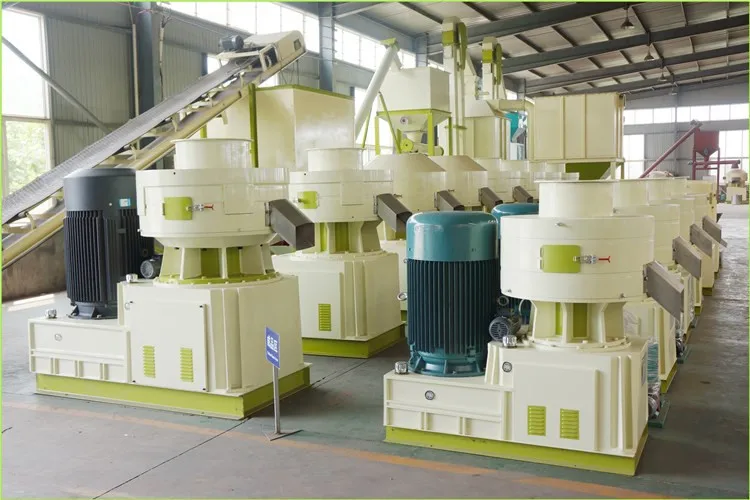
Grasses tend to not fuse nearly as well, and the resulting pellets are less dense and more easily broken. The proper combination of input material properties and pelleting equipment operation may minimize or eliminate this problem. It is also possible to add a "binder" material to the biomass to help it stick together, or to mix a fraction of sawdust, with similar results.



No comments:
Post a Comment